-
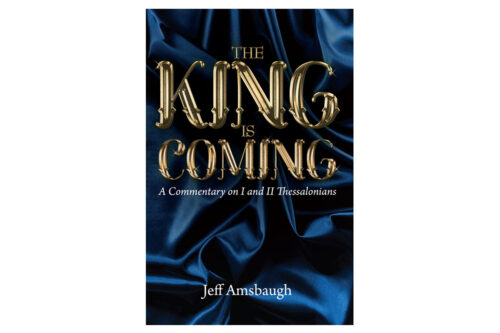
In previous ages, Christians lived in great anticipation of the Lord’s return. A belief in the imminent rapture of the church led many Christians to embrace holy living and aggressive evangelism. Times, however, have changed. Now, anyone who speaks of the Lord’s return is viewed as being on the same level as someone who claims to have seen Elvis in Burger King. Prophecy is seldom preached, and when it is, the preacher is viewed as a kook. The New Testament in general, and the books of I and II Thessalonians in particular, repeatedly emphasize, however, the fact that the King is coming. Our hope is that the pages of this commentary will help you live in light of that day.
-
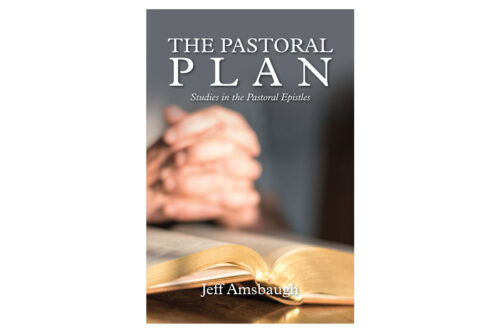
All too often, pastoral candidates are merely asked to preach a couple of sermons to a local assembly before the vote is taken to call them to lead a church. Indeed, we often refer to our pastors as “preachers.” But is there more to pastoral leadership than pulpit communication? What does God require of the man who would shepherd the flock? This commentary explores the books of I Timothy, II Timothy, and Titus to discover God’s plan for pastoral ministry.
-
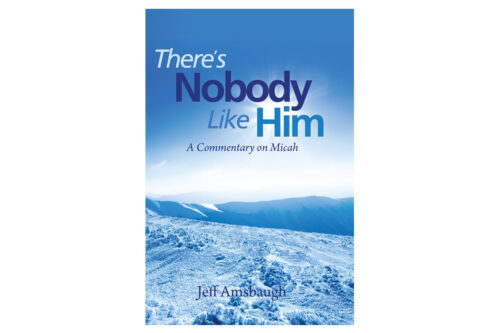
Micah’s name means “Who is like God?” And the prophet goes to great lengths to present God’s incomparability. There are three sections in the book each beginning with an admonition to hear (1:2, 3:1, 6:1). The first shows that there is nobody like God in identifying sin. The second shows that there is nobody like God in judging sin. And the third shows that there is nobody like God in forgiving sin. This commentary helps you explore the book of Micah and discover God’s uniqueness. Indeed, there’s nobody like Him.
-
However we interpret the marriage of Hosea, it was obviously the most important event in his life. This event shaped both the man and his message. It was out of this experience that Hosea would proclaim and demonstrate his understanding of God. Through his marriage, Hosea would understand our rejection of God, His discipline of us, and the cost of reconciliation. Despite our wickedness, God has eternally committed Himself to us. This commentary on Hosea explores these themes of a God who loves us till death and beyond.
-
Because many have recoiled from the fact that God would write a book about human sexuality, the Song of Solomon has often been allegorized as a book written to describe Christ’s love for the church. Does this mean that the book had to lay dormant for 900 years until the church was birthed? And how are we to explain God using Solomon, one of the worst husbands in history, to typify God’s love? Why is it that many who abhor allegorical interpretation are willing to accept it with regard to this Biblical work? In this commentary, we will discover that the Song needs no alteration or “deeper significance” to justify its place in the canon. To the contrary, this book will defend the fact that the proper use of human sexuality can turn a shepherd into a prince while its misuse can turn the world’s most celebrated sovereign into a beast. Indeed, God wrote the book of love.