-
Often we feel that a powerful apologetic is necessary to confront false religions and that courses in comparative religion are vital to evangelizing those from different faiths. When Paul, however, sought to rescue the Colossians from the Gnostic heresy that was pervading their town, he simply chose to exalt Christ. When Jesus is seen in all His glory, other faiths of necessity fade into the background. No competing system of thought can adequately replace the splendor of Jesus. Nothing can trump Christianity when Christ is in all things preeminent. We trust that this study of Colossians will help you see Jesus in all of His magnificence.
-
Job’s belief in the sovereignty of God did not allow him the luxury of attributing his successive and severe calamities to secondary sources. It never occurred to him to blame natural disasters, human agents, or even the devil for his suffering. The Lord had given, and the Lord had taken away. Why did God grant the devil permission to afflict Job so severely seeing Job lived so righteously? Job seeks answers, and those provided by his friends are wholly inadequate. When God finally arrives on the scene, He does so, not to answer questions, but to question answers. For example, God asks Job, “Where were you when I made behemoth?” The behemoth, a massive land animal, serves no apparent reason for existence. And if a man tries to get ahold of it in order to analyze it, he only ends up injuring himself. The point is that suffering is a behemoth. We often don’t know why God allows it, and if we attempt to understand it more fully, we only end up injuring ourselves. We trust that this commentary will assist you in trusting God even when His ways are inexplicable.
-
Many people love proverbs from whatever the source because they provide memorable advice in a short, pithy fashion. The book of Proverbs in Scripture, however, is not just good advice from wise people; it is infallible advice from the all-wise God. Proverbs provide the instruction that is necessary to live life wisely and godly. Numerous leaders have found success by reading, studying, and applying the truths from this book of the Bible. What about you? Got Wisdom? We trust that as a result of studying the Proverbs through this commentary you will become a wise guy in the best sense of that term.
-
Because many have recoiled from the fact that God would write a book about human sexuality, the Song of Solomon has often been allegorized as a book written to describe Christ’s love for the church. Does this mean that the book had to lay dormant for 900 years until the church was birthed? And how are we to explain God using Solomon, one of the worst husbands in history, to typify God’s love? Why is it that many who abhor allegorical interpretation are willing to accept it with regard to this Biblical work? In this commentary, we will discover that the Song needs no alteration or “deeper significance” to justify its place in the canon. To the contrary, this book will defend the fact that the proper use of human sexuality can turn a shepherd into a prince while its misuse can turn the world’s most celebrated sovereign into a beast. Indeed, God wrote the book of love.
-
Isaiah ends his great prophecy by telling us about a new heaven and new earth. He does not leave us in the dark, however, about how this new universe will come to be. The entire focus of the book is on the Messiah, Jesus Christ. The prophet tells us of Christ’s birth, Christ’s cross, and Christ’s return. Jesus is the Servant of the Lord who accomplishes the very salvation of God. Indeed, He is God’s salvation. And it is no halfway salvation. It is salvation that helps us in this life and in the life to come. Those who embrace Christ are saved to the uttermost. We trust that you will arrive at a greater appreciation of this great salvation through this study of Isaiah
-
This commentary examines the three major tests or evidences of salvation delineated by the Apostle John. These things are the doctrinal test, the social test, and the moral test. Do I believe the right things? Do I love my brother? Is my life characterized by righteousness? In short, does my life give evidence that I have been born again? Do I pass the tests?
-
Someone has said, "Blessed is the preacher who can get airborne without taking too much runway." If this statement is true, John and Jude were certainly blessed preachers. Both knew how to say much in a few words. Though postcards in length, these epistles contain a weighty message that embraces truth and exposes error. This commentary explores these often forgotten New Testament books and applies their message to the church today.
-
Esther lived in a materialistic society that was filled with antisemitic people who thought more of their personal advancement than the people of God who lived among them. In a day when women were treated as property, and Jews were thought worthy of extermination, God brought Esther to the throne for such a time as this. Through the help of Mordecai, the prayers of her fellow Israelites, and more importantly, through the invisible, providential hand of God, the tables were completely turned, and the Jews were protected while their enemies were destroyed. Thus, the book of Esther highlights the miraculous, protective intervention of God. Though the Lord is never mentioned in the book, He is present on every page. God is often most involved when His presence is not seen. The God of Esther can also help us in uncertain times by manifesting His presence through the lives of obscure volunteers for such a time as this.
-
As the children of Israel were exiled in Babylon, it appeared as if God’s glory had permanently departed from their midst. Indeed, God begged them not to send Him away as His glory gradually departed. The Israelites, however, like us, often believe that life is do-able without God. The result of this humanistic philosophy is bondage and death. God, however, is not through with us. He promises to return in all of His power and fill not only the temple, but also the whole earth, with His glory. Join us in a study of Ezekiel and learn how to appreciate the glory of God that indeed fills the house.
-
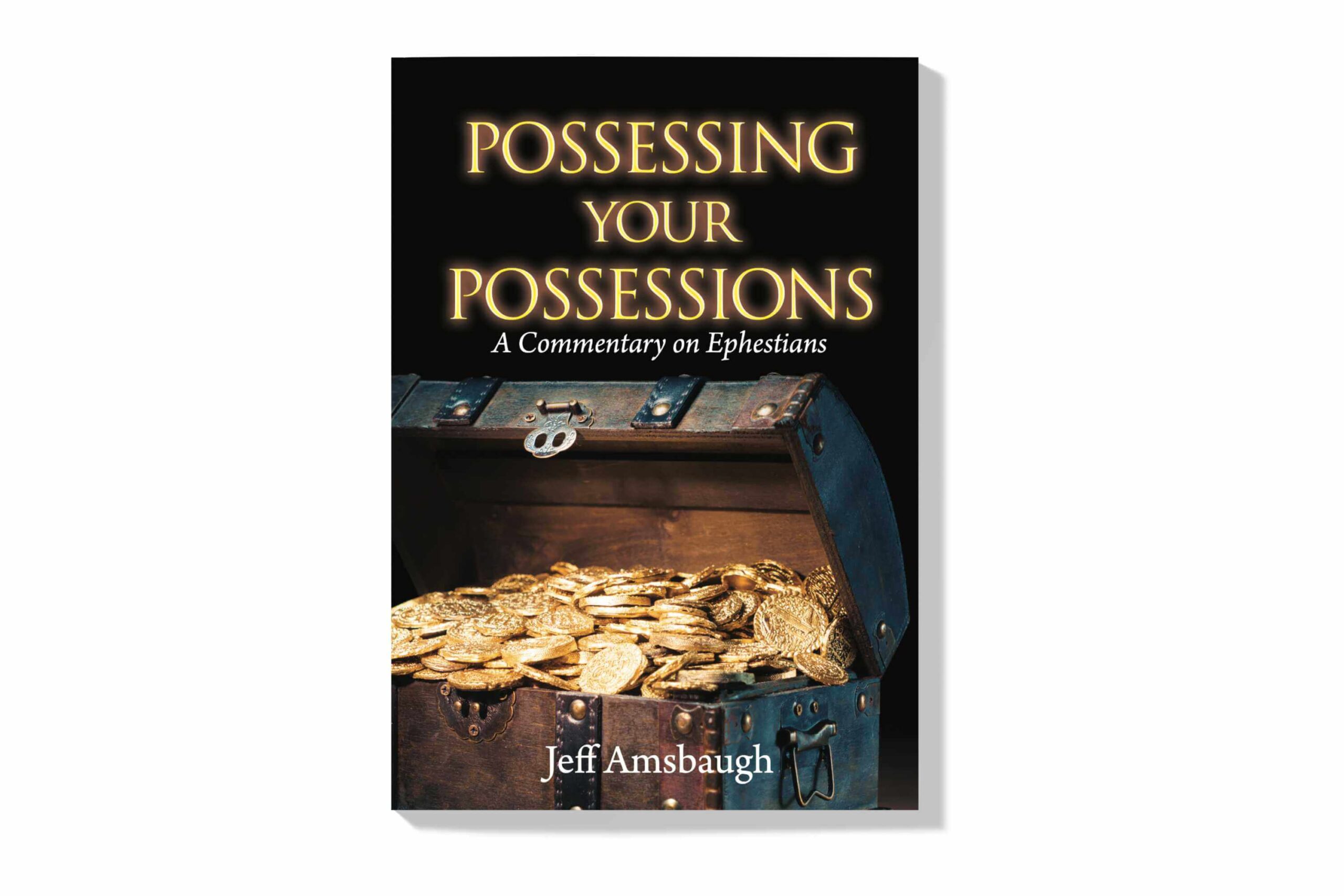
God promised Joshua that the entire land of Canaan was available, but he and the Israelites must go forward and possess their possessions. Sadly, in the New Testament era, Christians many times allow the promises of God to be nothing more than unclaimed freight. Paul, in the book of Ephesians, outlines for us the glorious inheritance that we have in Christ and then encourages us to advance and claim it. May this study in Ephesians incentivize you to possess your possessions.
-
We often think that trials are inappropriate for the Christian, and therefore we respond with bitterness and retaliation when they come. The Bible is clear, however, that trials are not foreign to the Christian life but a necessary component of it. Therefore, trials should not only be embraced but enlisted to serve God more effectively. This commentary explores the book of I Peter and develops concepts to help you submit the next time your Christian life is under fire.
-
When a person accepts Jesus Christ as his personal Saviour, he is immediately justified in the eyes of God. But how is a person justified in the eyes of men? This commentary takes you through the book of James and explains the defining hallmarks of Christianity. Here you will find practical tips on how to stay right in a world that is constantly drifting left.