-
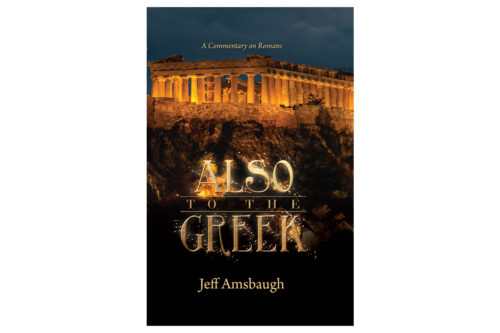
Many believe that the major theme of Romans is justification by faith. This assumption, however, does not provide an occasion for the letter, forces the climax of Romans to be reached in chapter four, and diminishes chapters nine through eleven to a mere parenthesis in the epistle. While it is true that justification is by faith alone, Paul presents this truth as part of something bigger. All men are equally condemned, justified, sanctified, planned, and needed. Therefore, all men should be received regardless of their cultural, social, or economic background. Indeed, the Gospel has ramifications. It is not merely for the Jew. It is also for the Greek.
-
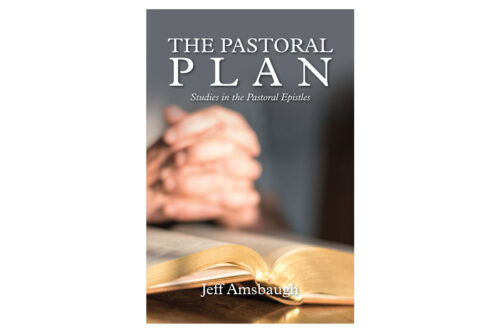
All too often, pastoral candidates are merely asked to preach a couple of sermons to a local assembly before the vote is taken to call them to lead a church. Indeed, we often refer to our pastors as “preachers.” But is there more to pastoral leadership than pulpit communication? What does God require of the man who would shepherd the flock? This commentary explores the books of I Timothy, II Timothy, and Titus to discover God’s plan for pastoral ministry.
-
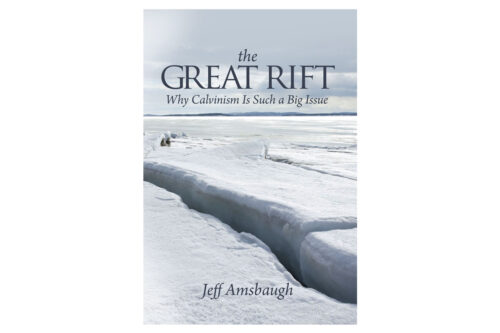
If you have been saved for any length of time, you have probably seen some rift over Calvinism. Perhaps you feel uncomfortable believing that your lost relatives are unsaved because somehow God has not chosen them to salvation. That all having been said, however, you are not quite sure how this fits with the election passages of the Bible. In The Great Rift, Jeff Amsbaugh explores the roots of Calvinism and attempts to explain the five points of Calvin in light of God’s Word in order to help you the next time a rift over Calvinism comes your way.
-
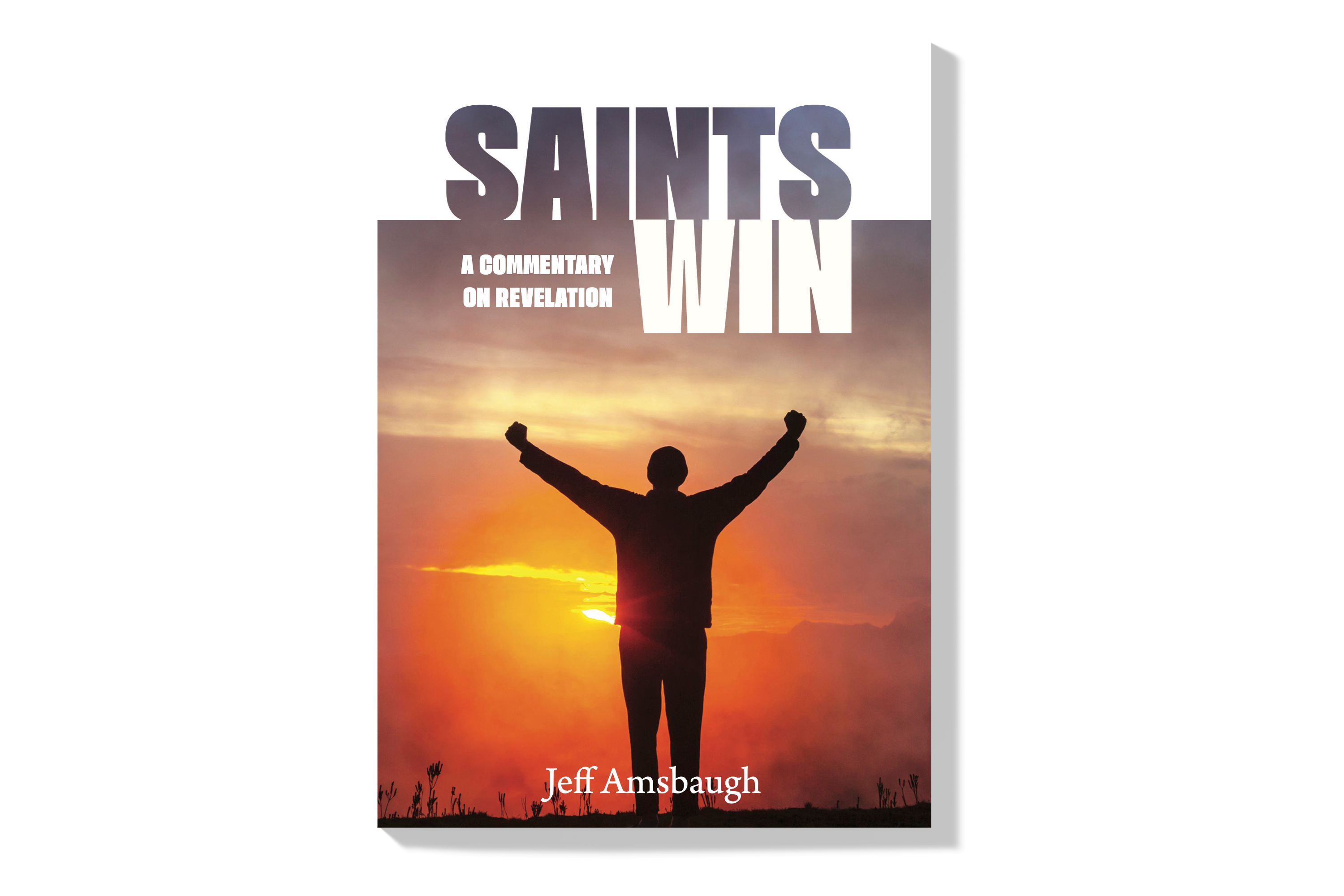
Though there are many different interpretations to the book of the Revelation, and good men disagree about minor points of exegesis, the thrust of the book is obvious. It is the Revelation of Jesus Christ. The book is about Jesus and how He emerges victorious over Satanic and despotic government. And because believers are affiliated with Jesus, they too are winners. No matter how much tribulation we have in this world, we can be of good cheer, for Christ has overcome the world. In the end, the saints win. We trust that as a result of this study of Revelation, you will rest and rejoice in the victory that is yours through Jesus Christ our Lord.
-
It’s one of the ugliest, most damaging skeletons to come out of the closet—the unaddressed “elephant in the room” in Christian circles. The ever-growing presence and accessibility of obscene viewing has added to the strangle hold it’s taken on many lives. For many people, the battle rages daily. With all the shame and addiction surrounding pornography, where can someone truly searching for help turn to? In the book, Pay-Per-View, Jeff Amsbaugh not only address the real threat of pornography to Christianity, but shows relevant steps to win this critical war. The stakes are high—this shadowed enemy has scarred families, ended marriages, and mentally altered thousands! Please, count the cost and arm yourself against this lethal weapon of Satan today.
-
The book of Philippians is a missionary prayer letter, yet few theologians have commented on the missiological aspects of this epistle. In Keeping the Mission in the Missionary, Jeff Amsbaugh comments on the book of Philippines as a missionary prayer letter. In so doing, he provides a valuable tool for local churches to evaluate missionaries the are considering for support and for missionary candidates to evaluate the ministries before they go to the field.
-
In previous ages, Christians lived in great anticipation of the Lord’s return. A belief in the imminent rapture of the church led many Christians to embrace holy living and aggressive evangelism. Times, however, have changed. Now, anyone who speaks of the Lord’s return is viewed as being on the same level as someone who claims to have seen Elvis in Burger King. Prophecy is seldom preached, and when it is, the preacher is viewed as a kook. The New Testament in general, and the books of I and II Thessalonians in particular, repeatedly emphasize, however, the fact that the King is coming. Our hope is that the pages of this commentary will help you live in light of that day.
-
The hallmark of orthodox Christianity is justification by faith. The thing that separates Christianity from every other religion is the fact that men are counted righteous before God by faith in the work of Christ independent of human merit. After we are saved, however, we sometimes feel that we must work for the smile of God. We believe that we are justified by faith but sanctified by works. Paul uses no other word but “foolish” to describe this mentality. In this commentary, you will learn that growth in the Christian life is accomplished by the same means as entrance into the Christian life - by grace through faith.
-
We live in a world that invites comparisons. We compare restaurants, cars, and even churches. Some seminaries even offer courses in comparative religions. One famous apologist said that “all religions are essentially the same. They just differ over minor issues such as sin, salvation, heaven, and hell.” The author of the book of Hebrews goes to great lengths to prove that Jesus is better than anything religion can offer. Join us in this study of Hebrews to find out why Jesus is “better by far.”
-
The children of Israel had returned from Babylonian captivity and were eagerly anticipating great things from the Lord. They had returned to their homeland and had rebuilt their temple. Fifty years later, however, expectations were very low. Joshua and Zerubbabel had both died. The glory of the Lord had not filled the temple as Ezekiel said it would. And the day of miracles had passed with Elijah and Elisha. This was an apathetic age, an uneventful waiting period. Malachi writes to his fellow Jews to give them cures for apathy. This commentary explores those cures and presents them as hope for our current apathetic age.
-
Though Nehemiah was privileged to live in the lap of luxury while serving as cupbearer to a Persian king, he left it all for the seemingly impossible task of rebuilding the city walls of Jerusalem. Obviously, he needed the help of God to mobilize a task force of Jewish workers. This commentary examines the prayer life, management skills, and tenacity of one of the Old Testament's greatest leaders.
-
However we interpret the marriage of Hosea, it was obviously the most important event in his life. This event shaped both the man and his message. It was out of this experience that Hosea would proclaim and demonstrate his understanding of God. Through his marriage, Hosea would understand our rejection of God, His discipline of us, and the cost of reconciliation. Despite our wickedness, God has eternally committed Himself to us. This commentary on Hosea explores these themes of a God who loves us till death and beyond.